Why visit the Tarquinia tombs
Why visit the Tarquinia tombs
Painted art that predates Rome
While most of what survives from the ancient world is stone and pottery, Tarquinia preserves actual painted scenes — vivid colour on plaster, applied by Etruscan artists more than two and a half thousand years ago. At least 200 of the roughly 6,000 tombs in the Monterozzi necropolis carry wall paintings, a concentration of ancient colour painting unmatched almost anywhere else.
Banquets, dancers and the sea
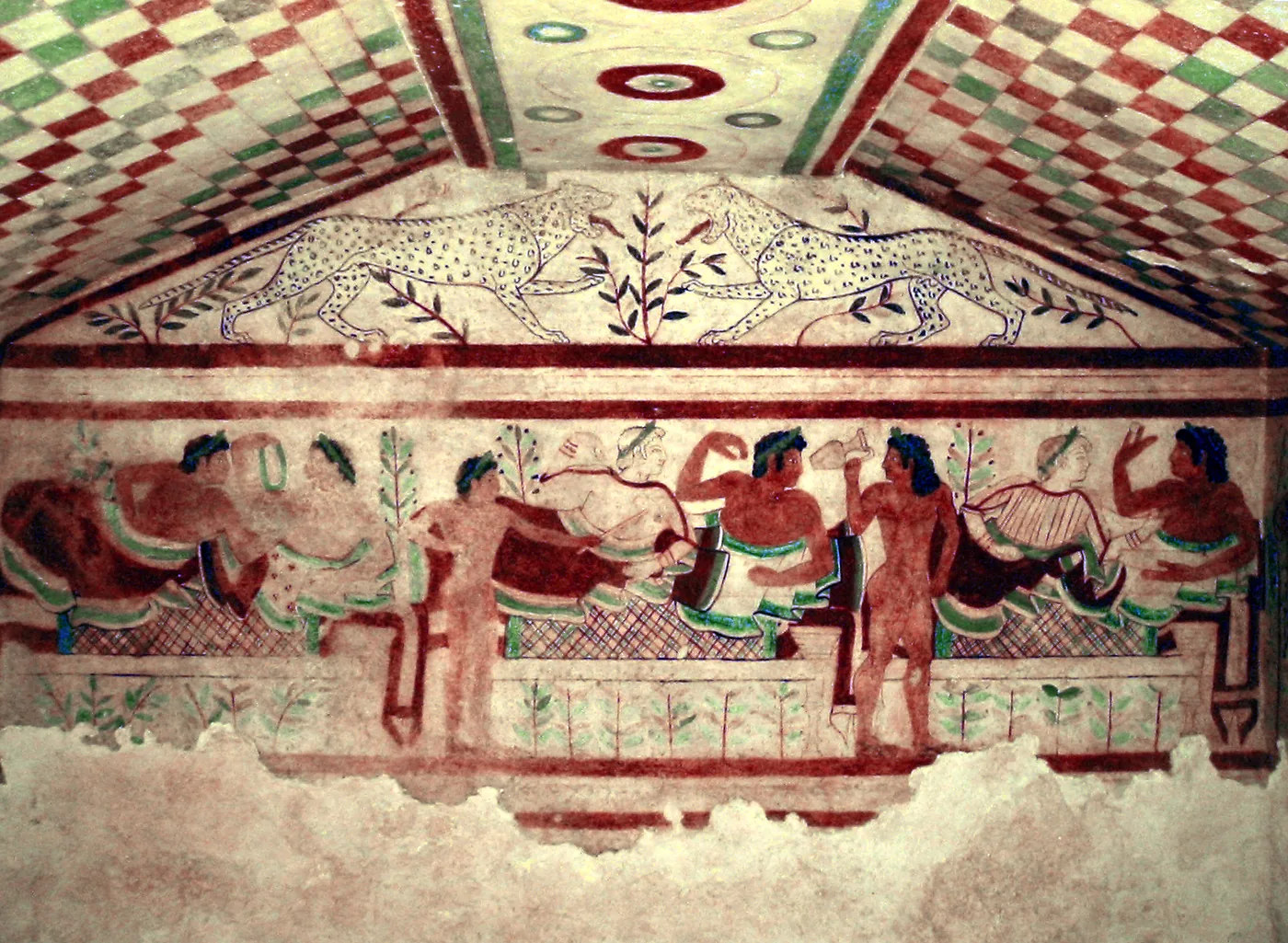
The frescoes show scenes of everyday and afterlife pleasure: banquets with music and dancing, sporting contests, hunting and fishing, and — in later tombs — processions of magistrates and demons guiding the dead. Together they're one of the richest visual records of Etruscan society that survives anywhere.
UNESCO-recognised, genuinely rare
The Etruscan Necropolises of Cerveteri and Tarquinia were inscribed as a UNESCO World Heritage Site in 2004, recognising painting of a quality UNESCO itself calls virtually unrivalled elsewhere in the Etruscan world. Because the tombs are fragile, only a rotating selection is open to visitors at any time — part of what keeps a visit here memorable rather than routine.
What to see at Tarquinia
What to see at Tarquinia
A visit to Tarquinia means descending into a handful of small painted chambers, one at a time. These are the tombs and themes to look for.
- Tomb of the Leopards
The banquet scene
Tarquinia's most famous tomb: a vivid banqueting scene under two facing leopards, painted around the 5th century BC — one of the best-preserved and most photographed images from the entire Etruscan world.
- Tomb of Hunting and Fishing
Sea, birds and sport
A lively scene of divers, fishermen and hunters set against a seascape — a rare, joyful glimpse of Etruscan leisure and the natural world.
- Tomb of the Augurs
Ritual and wrestling
Among the earliest and most important painted tombs, showing funerary games, wrestlers and mourning figures from the 6th century BC.
- The underworld tombs
Demons and the afterlife
Later tombs shift tone, adding underworld imagery — demons escorting the dead — reflecting a darker turn in Etruscan belief as Rome's power grew.
- 6,000 tombs, 200 painted
A vast necropolis
The Monterozzi hill holds thousands of tombs in total; only a fraction are painted, and only a rotating few are open on any given day to protect the fragile pigments.
- Tarquinia town & museum
Context above ground
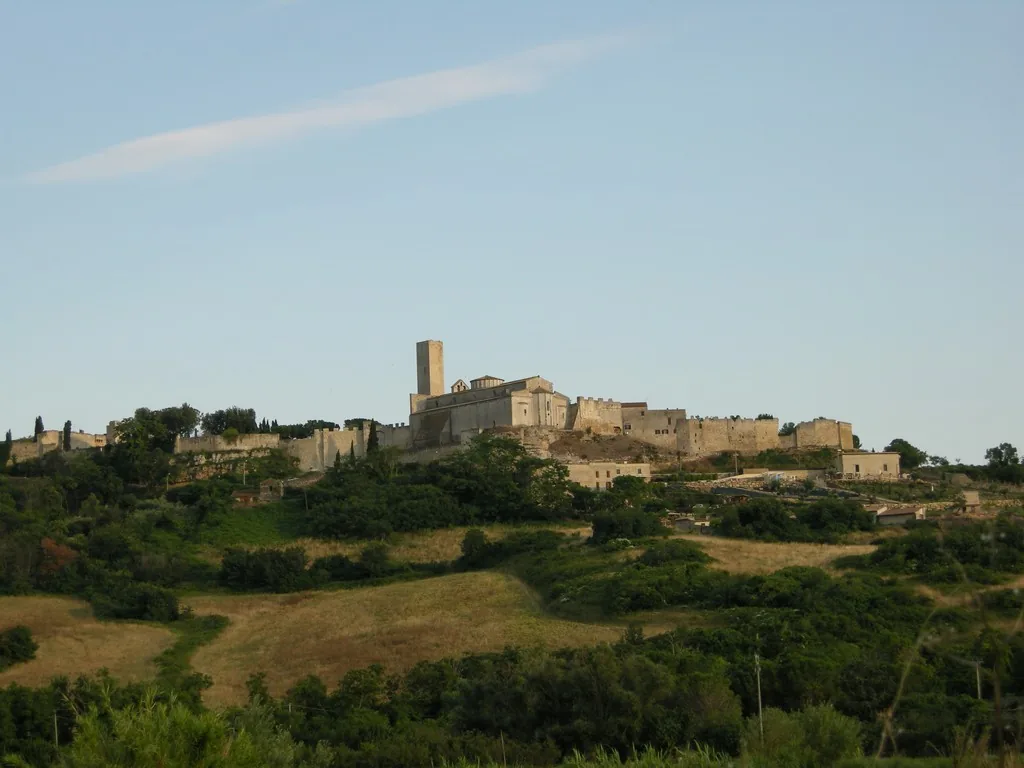
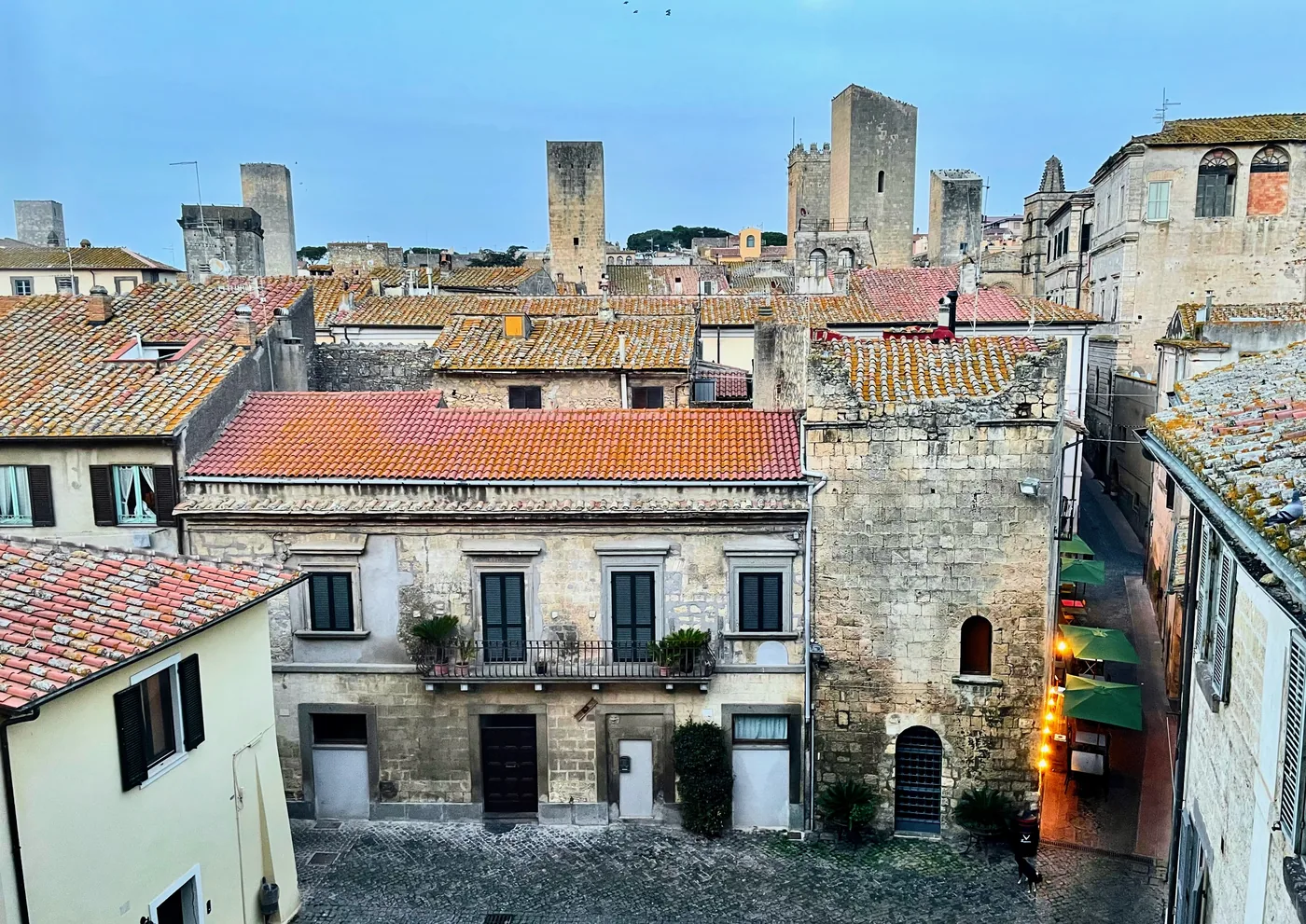
The hilltop medieval town of Tarquinia and its National Etruscan Museum hold further finds and give context to the civilisation behind the tombs.
The day trip from Rome
The day trip from Rome
Tarquinia sits north of Rome on the Etruscan coast, so almost everyone visits on a guided day trip — here's how it works.
About 90 minutes from Rome
Tarquinia is roughly 90 minutes north of Rome by car, making it a comfortable day trip — most tours combine it with Cerveteri's Banditaccia necropolis, another major Etruscan UNESCO site, for a fuller Etruscan day.
Two necropolises, one trip
The strongest-rated tours pair Tarquinia's painted tombs with Cerveteri's Banditaccia necropolis — one of the largest Etruscan burial grounds, with thousands of tumulus tombs dating to the 9th century BC.
What tours include
Private day trips typically bundle round-trip transport from Rome, a driver-guide, and time at both necropolises and their museums; lunch in Tarquinia is often optional. Check exactly what your chosen option includes when you book.
On site
Painted tombs are small underground chambers reached by steps, viewed through glass or from a short walkway to protect the frescoes — so expect a slower, more intimate pace than an open-air ruin.
Tarquinia, in pictures
Tarquinia, in pictures
The painted Tomb of the Leopards and the hilltop town of Tarquinia, Lazio.
Tour options & what's included
Tour options & what's included
| Option | What it includes | Good to know |
|---|---|---|
| Private Rome day trip: Tarquinia + Cerveteri | Driver-guide, transport, both necropolises | Top-rated, flexible private option |
| Small-group Etruscan day tour | Shared transport and guide | A more budget-friendly way to see both sites |
| Tarquinia-only tour | Focused visit to the painted tombs | Good if you have less time |
| Tour with lunch | Adds a traditional Tarquinia lunch | Good if you want the day fully organised |
Ways to visit the Tarquinia tombs
Find a Tarquinia tour for your dates
Every option below is bookable through GetYourGuide, with live availability and the final price shown in your own currency before you pay.
Planning your visit
Planning your visit
Book ahead
Only a rotating selection of painted tombs is open at any time, and the best-rated private tours run in small groups — booking ahead secures your date.
Pair it with Cerveteri
Tarquinia and Cerveteri's Banditaccia necropolis form a single UNESCO listing and complement each other — Tarquinia for painted colour, Cerveteri for the sheer scale of its tumulus tombs.
Go slowly underground
The tombs are small, dimly lit chambers — go at a relaxed pace, and don't rush past the frescoes' detail, which rewards a longer look than most open-air ruins.
Go with a guide
The meaning behind the banquet scenes, the underworld imagery and the shift in Etruscan belief over centuries is easy to miss without context — a guide makes the tombs far more legible.
Booking flexibility
Listings typically offer free cancellation up to 24 hours before, so you can lock in a departure and adjust later if your Rome plans change.
Planning a Tarquinia day from Rome
Planning a Tarquinia day from Rome
GEO/FAQ
Tarquinia visit questions
What is the Tarquinia necropolis?
The Necropolis of Monterozzi is an Etruscan burial ground on a hill outside Tarquinia, Italy, containing around 6,000 tombs, at least 200 of them painted with frescoes. In use from the 9th century BC, with its finest painted tombs mainly from the 6th–4th centuries BC, it was inscribed as part of a UNESCO World Heritage Site (with Cerveteri) in 2004.
What do the tomb paintings show?
The frescoes depict banquets with music and dancing, sporting contests, hunting and fishing scenes, and, in later tombs, underworld imagery including demons escorting the dead. The Tomb of the Leopards and the Tomb of Hunting and Fishing are among the most celebrated examples.
How do I get there from Rome?
Tarquinia is about 90 minutes north of Rome by car. Almost everyone visits on a guided day trip, most often combined with Cerveteri's Banditaccia necropolis, another major Etruscan UNESCO site nearby.
Is it worth the day trip?
If you're interested in ancient art or pre-Roman history, yes — Tarquinia offers something few ancient sites can: actual painted colour, not just stone. Pairing it with Cerveteri makes for one of the richest Etruscan days achievable from Rome.
Why can't I see all the tombs?
Only a rotating selection of the painted tombs is open to visitors at any time, to protect the fragile frescoes from humidity and light damage. This is standard conservation practice at the site and is part of what keeps each visit distinct.
Can I combine Tarquinia with other sites?
Yes — the most popular bookable tours combine Tarquinia with Cerveteri's Banditaccia necropolis, and some add a traditional lunch in Tarquinia town. Each option's inclusions and live price are shown in the booking widget.
Still deciding which Tarquinia tour, or which day?
Leave your email and roughly when you're travelling — we'll send a short rundown of how the Tarquinia and Cerveteri day trips from Rome compare and what's included.